


Apr 09, 2026
Lead Gift Establishes the Sarah and Ernest Butler Dinosaur Trackways Building at Texas Science & Natural History Museum
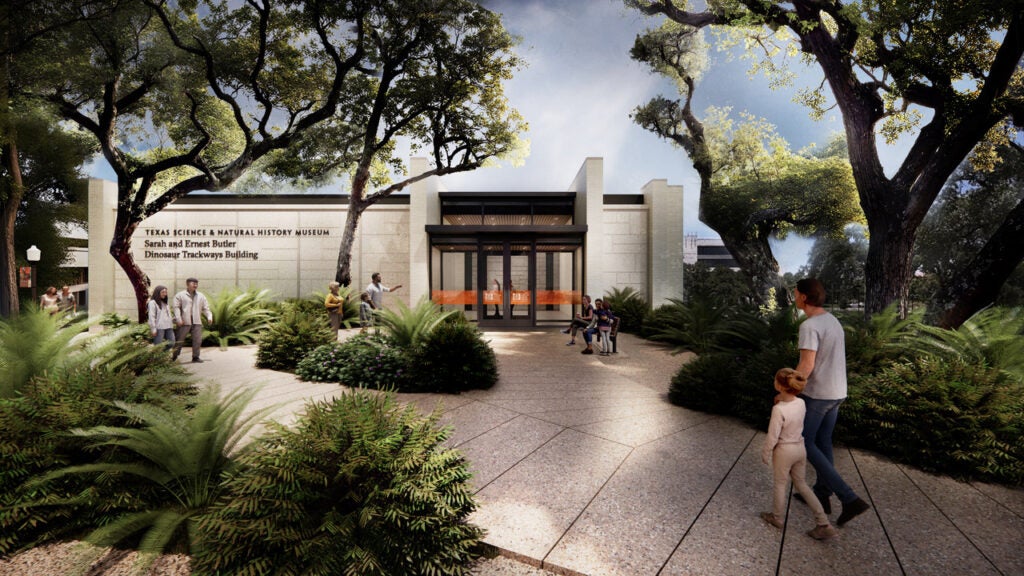
Texas Science & Natural History Museum at The University of Texas at Austin has received a generous lead gift from Austin philanthropists Sarah and Ernest Butler to support the conservation and exhibition of one of Texas’ most celebrated fossil discoveries: the 113-million-year-old dinosaur trackways discovered near Glen Rose, Texas. In recognition of the gift, the museum will name the new Sarah and Ernest Butler Dinosaur Trackways Building, which will house the conserved fossils and create a new visitor experience on the museum grounds.
The project will protect and showcase the fossilized footprints of a massive sauropod dinosaur and a theropod predator preserved in limestone along the Paluxy River during the Early Cretaceous period. These trackways represent one of the most significant dinosaur footprint discoveries in North America.
“This project represents a once-in-a-generation opportunity to safeguard one of Texas’ most iconic fossil discoveries,” said Carolyn Connerat, the museum’s managing director. “With the Butlers’ support, we will preserve these remarkable fossils while creating new ways for visitors, students and researchers to engage with Texas’ deep natural history.”
The trackways were first identified in the 1930s by paleontologist Roland T. Bird, who oversaw the removal of two large limestone slabs containing the tracks. One slab was sent to the American Museum of Natural History in New York, while the other was brought to Austin through a Work Projects Administration effort and installed at UT’s Texas Memorial Museum, today known as Texas Science & Natural History Museum.
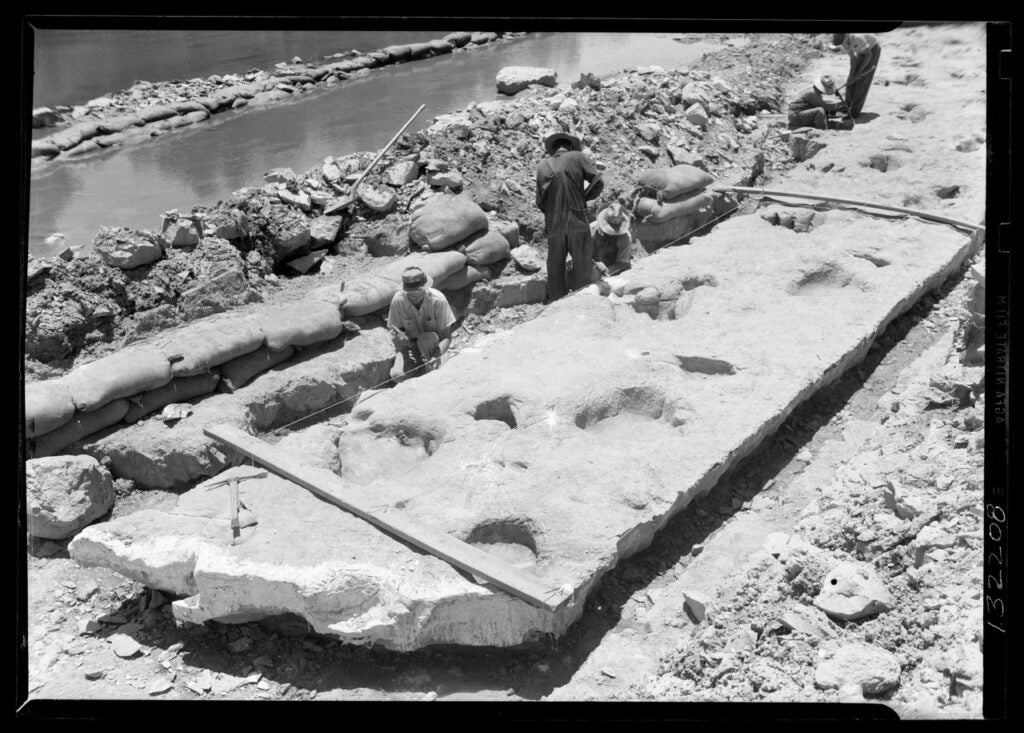
The sauropod trackway preserved across the slabs includes fore- and hind-foot impressions scientifically described as Brontopodus birdi, named in Bird’s honor. These fossils remain designated reference specimens for this type of dinosaur footprint and continue to play an important role in paleontological research.
Since 1940, the Texas slab has been housed in a small stone building adjacent to the museum. The structure closed to the public in 2013 due to structural concerns and environmental conditions that threatened the long-term preservation of the fossils.
Following recommendations from a national conservation firm in 2024, the museum began relocating the slabs to a controlled laboratory environment for conservation. Specialists are preparing the fossils for installation in the new, state-of-the-art Sarah and Ernest Butler Dinosaur Trackways Building, which will provide a protective environment and allow visitors to walk around the trackways for the first time since they were lifted from the riverbed.
In May 2025, a team from UT Planning, Design and Construction began carefully deconstructing the original stone structure. Fossil-bearing limestone blocks from the building were saved to be incorporated in the new building, preserving a connection to the site’s history.
The Sarah and Ernest Butler Dinosaur Trackways Building will expand the museum’s educational programming for preK-12 students, families and lifelong learners. The new immersive experience will feature educational exhibits and gardens that will serve as a welcoming gathering space for visitors to explore native Texas plants and connect today’s landscapes with the ancient past. Construction will begin in early August 2026, and the building will open in October 2027.
The gift represents a major step forward in the museum’s ongoing revitalization and its mission to share the stories of life in the natural world of Texas. The museum is working to secure additional philanthropic support to complete funding for the restoration of the trackways and construction of the new facility.
For media inquiries, please email TMMComms@austin.utexas.edu